Digital Printing: A Smart Manufacturing Solution for Modern Garment Factories
- Share
- Issue Time
- Dec 18,2025
Summary
Digital printing enables garment factories to deliver fast sampling, flexible production, accurate colors, and sustainable custom apparel manufacturing.
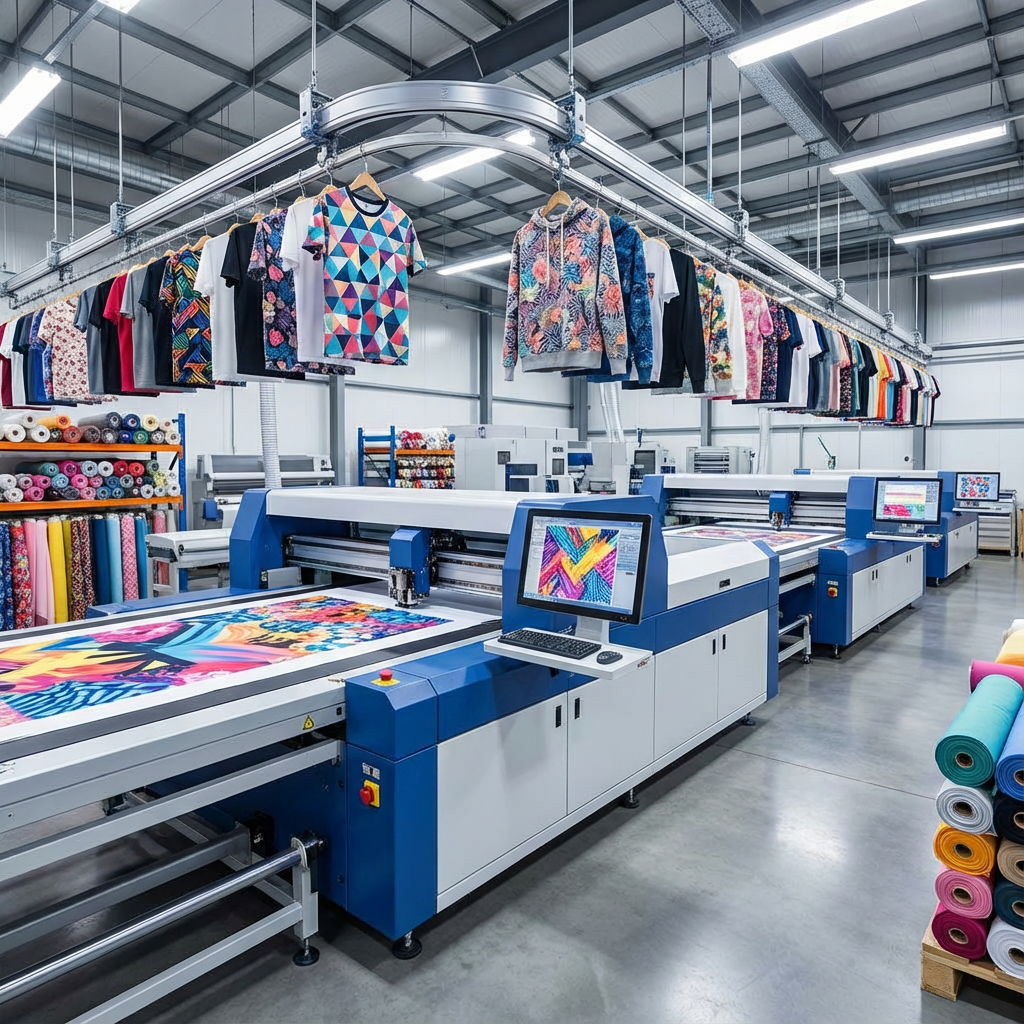
With the continuous evolution of the global apparel supply chain, garment manufacturers are under increasing pressure to deliver short lead times, flexible production, and consistent quality. In this context, digital printing has become a core production technology for modern clothing factories.
From a manufacturer’s perspective, digital printing is a highly efficient textile printing method that directly transfers digital artwork onto fabric through computer-controlled inkjet systems. Compared with traditional screen printing, digital printing eliminates plate-making, reduces setup time, and significantly improves production flexibility—especially for custom orders and small to medium batch production.
One of the key advantages of digital printing for factories is fast sampling and quick order turnaround. Design files can be adjusted instantly, allowing factories to produce samples within hours instead of days. This capability greatly supports brand clients who require rapid development cycles and frequent style updates.
In terms of production quality, digital printing offers high color accuracy, sharp details, and excellent consistency. Complex patterns, gradients, and multi-color graphics can be reproduced precisely, reducing quality disputes and rework rates. For manufacturers serving European and American markets, this stability is crucial for maintaining long-term buyer relationships.
Digital printing also aligns with lean manufacturing and sustainable production goals. The process uses less water, fewer chemicals, and generates minimal fabric waste. This not only lowers production costs but also helps factories meet the environmental standards increasingly required by international buyers and fashion brands.
Today, digital printing is widely applied in factory production lines for T-shirts, hoodies, streetwear, sportswear, kidswear, and home textiles. It can also be combined with embroidery, silicone printing, puff printing, and other techniques to create value-added products and differentiate factory offerings.
As automation and smart manufacturing continue to advance, digital printing is no longer just a decorative process—it is a strategic manufacturing capability. For garment factories aiming to remain competitive in a fast-changing global market, investing in digital printing means gaining greater flexibility, efficiency, and long-term production stability.